
Kazakhstan Trip Cost from India: A Real Budget Breakdown
Where the money actually goes on an Almaty week, and why private transport rather than hotels is the line that decides your budget.
By SYT Editorial, Travel Content Team ·
- Exchange rate (14 September 2026)
- 1 Kazakh tenge = about Rs 0.21
- Exchange rate (14 September 2026)
- 1 US dollar = about Rs 95.7
- Almaty metro fare
- 120 tenge per ride with an Onay card
- Onay transport card
- 500 tenge, of which 420 tenge is a refundable deposit
- Shymbulak adult day lift pass (2025/26 season)
- 9,000 tenge weekdays, 12,000 tenge weekends
- Almaty to Astana train fare
- About USD 15 to USD 35
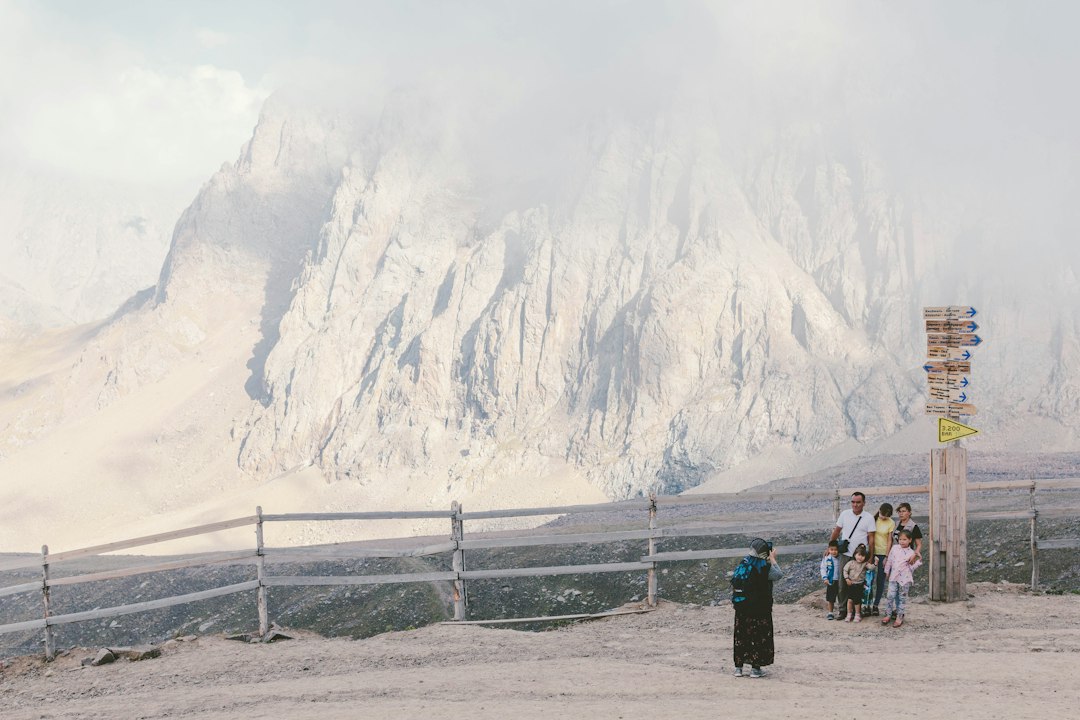
Photo by Darya Jum
The first thing to fix is the exchange rate, because every other number depends on it.
As of 14 September 2026, 1 Kazakh tenge was worth about Rs 0.21, so 1,000 tenge is roughly Rs 210. Dividing tenge by five gives you a usable rupee figure in your head. Separately, 1 US dollar was about Rs 95.7, which matters because some travel services in Kazakhstan quote in dollars.
Everything below is stated in the currency the source quotes it in, with an approximate rupee figure marked as approximate. Rates move, so treat the rupee numbers as a guide, not a quotation.
The honest headline: it is the transport, not the hotel
Most Indian travellers plan a Kazakhstan budget the way they plan a Dubai one, worrying about hotel category. That is the wrong lever here.
Almaty city itself is cheap to move around. The metro costs 120 tenge a ride, about Rs 26, using an Onay card that costs 500 tenge of which 420 tenge is a refundable deposit. Food is reasonable. Museums and city sights are inexpensive or free.
The expensive part is that almost nothing worth seeing is in Almaty. Charyn Canyon is about 200 km east. Kolsai and Kaindy are further. Big Almaty Lake is 1,700 metres above the city up a mountain road. None of these are served by useful public transport, so a private vehicle for the day is the standard and it is charged per vehicle, not per person.
That single fact reshapes the budget. Two people pay the same for the car as four do, so group size moves a Kazakhstan budget more than hotel star rating does.
Flights: the cheapest part of the whole trip
Delhi to Almaty is a 3 hour 25 minute non-stop with 7 flights a week. It is a short-haul flight priced like one, and it is the reason Kazakhstan undercuts European trips of similar ambition.
Mumbai has 3 non-stops a week at about 4 hours 30 minutes. Fewer flights means less fare competition and less flexibility on dates, so Mumbai departures usually cost more and constrain your itinerary shape.
Fares swing hard with season. Ski season and the summer peak are the expensive windows. Airfares are not publicly fixed and I am not going to quote a number I cannot source, but the structural point holds: this is a short-haul ticket, not a long-haul one.
Accommodation: a wide and genuinely usable range
Almaty has everything from hostels through to the international five-star names, and the middle of that range is good value by Indian standards. The operator itineraries sold to Indian groups typically offer a three-star, four-star and five-star tier, which tells you the market is built around exactly that choice.
Rates are not centrally published and vary by season, so book through a rate-comparison site close to your dates rather than trusting a figure in an article. What is worth knowing is structural: staying central, near Panfilov Park or the Arbat, saves you real money in taxi fares over a week and is worth a slightly smaller room.
Ground transport: the number to plan around
| Item | Cost | Approximate rupees |
|---|---|---|
| Almaty metro, single ride | 120 tenge | Rs 26 |
| Onay transport card | 500 tenge (420 refundable) | Rs 107 |
| Almaty to Astana train | About USD 15 to 35 | Rs 1,400 to 3,350 |
City transport is close to free by Indian standards. The costs that matter are the private day-trip vehicles, which operators price per vehicle by class: sedan, minivan, Hiace, Sprinter. Rates are commercial and not publicly listed, so ask for the per-vehicle figure rather than a per-person one, and then divide by your group.
Day trips: entrance fees are separate, always
This catches people out. When you book a Charyn Canyon or Kolsai day, you are usually buying the vehicle and driver-guide. The national park entrance fees are charged per person at the gate and are extra. The same applies at Ayusai, Issyk and Kaindy.
Individually they are small. Across a week with four park days and a family of four, they stop being a rounding error. Ask what the gate fee is per person before you go and carry tenge in cash, because gates are not card-friendly.
Skiing: the one line item with published prices
Shymbulak publishes its tariff, which makes it the easiest thing in Kazakhstan to budget.
In the 2025/26 season, an adult full-day lift pass was 9,000 tenge on weekdays and 12,000 tenge at weekends, approximately Rs 1,900 and Rs 2,550. Night skiing passes were 8,500 tenge in the main season, and a flat 26,000 tenge rate applied over the New Year holidays.
Two honest caveats. Equipment hire and lessons are on top. And the 2026/27 tariff is normally published in the autumn, so check the resort's own app or site before you travel rather than relying on last season's numbers.
Even so, the comparison holds: a day on a lift-served 2,200 to 3,200 metre mountain for under Rs 2,000 is dramatically cheaper than the equivalent in Europe or Japan.
Food, SIM and the small stuff
Eating is not a big line. Almaty has a real cafe culture, local canteens are cheap, and mid-range restaurants are well below Gulf or European pricing. Operator itineraries quote lunch supplements around USD 16 and dinner around USD 20 to 25 per person, which is the upper, tourist-facing end rather than what you pay walking into a local place.
A local eSIM for a week or two is a small cost and worth it, both for maps and because much of the mountain area has patchy coverage where a roaming pack would be worse.
Where a Kazakhstan budget actually goes wrong
Three places, consistently:
- Booking private day trips as a couple. The car costs the same for four. Pair up if you can.
- Forgetting the park gate fees, then paying them four times in cash you did not carry.
- Building the trip around Kaindy Lake without budgeting the 4x4 leg. The last stretch of track needs a separate 4x4, charged per vehicle. Turning up without it means stopping at the end of the sealed road.
The one-line summary
Flights are cheap, city life is cheap, and mountains are cheap to enter. Private vehicles for day trips are the real cost, and they are priced per car. Travel as four rather than two and a Kazakhstan week costs meaningfully less per head without changing a single thing about the trip.
Questions people ask
What is the tenge worth in rupees?
As of 14 September 2026, 1 Kazakh tenge was worth about Rs 0.21, so 1,000 tenge is roughly Rs 210. Dividing tenge by five is a good mental shortcut. Rates move, so check before you travel.
Is Kazakhstan cheaper than Dubai for Indians?
For day-to-day spending, generally yes. City transport at 120 tenge a ride, local food and museum entry are all well below Gulf pricing. The gap narrows if you book a lot of private day-trip vehicles, which are the main cost in Kazakhstan and barely feature in a Dubai budget.
What is the biggest cost on a Kazakhstan trip?
Private transport for day trips, once you exclude flights. Charyn Canyon, Kolsai, Kaindy and Big Almaty Lake are all 100 to 300 km out with no useful public transport, and vehicles are charged per car rather than per person.
How much is a ski day at Shymbulak?
In the 2025/26 season an adult full-day lift pass was 9,000 tenge on weekdays and 12,000 tenge at weekends, about Rs 1,900 and Rs 2,550. Equipment hire and lessons are extra, and the 2026/27 tariff is normally published in the autumn.
Are national park entry fees included in tour prices?
Usually not. Most operators price the vehicle and driver-guide, with park entrance fees charged per person at the gate on top. Charyn, Kolsai, Kaindy, Ayusai and Issyk all charge separately, so ask for the per-person gate fee and carry tenge in cash.
How much does the Almaty to Astana train cost?
Roughly USD 15 to USD 35 depending on the train and class, which is about Rs 1,400 to Rs 3,350 at the mid-September 2026 rate. The fast Tulpar-Talgo services take 12 to 13 hours, slower overnight trains take 16 to 18.
Does travelling in a bigger group make Kazakhstan cheaper?
Significantly, and more than in most destinations. Day-trip vehicles are priced per car across sedan, minivan, Hiace and Sprinter classes, so four people split the same fare that two would pay. Group size moves the budget more than hotel category does.
Should I carry cash or use cards in Kazakhstan?
Both. Cards work well in Almaty restaurants, hotels and shops. Cash in tenge is needed at the Green Bazaar, national park gates, rural cafes and small mountain stops, which are exactly the places a day trip takes you.
Sources
- Kazakhstani tenge to Indian rupees Exchange Rate History · Wise
- US dollar to Indian rupees Exchange Rate History · Wise
- Almaty Metro: 11 stations, 13.4 km, fares and map · Mapa Metro
- Onay card - check balance, top up and buy · Almaty Metro
- Shymbulak Ski Resort Almaty 2026 - Lift Pass Prices, Rental & Ski Lessons · Zabugorshiki
- Kazakhstan Train Travel: The Complete Guide · Kazakhstan Tourism
- Flights from New Delhi to Almaty: DEL to ALA Flights + Flight Schedule · FlightConnections
- Almaty climate: seasons, monthly averages · Climates to Travel
Written by
SYT Editorial
Travel Content Team
All guides by SYT →02More from Kazakhstan
- 01Where to Stay in Kazakhstan: Areas Honestly Compared6 min
- 027-Day Kazakhstan Itinerary6 min
- 03Kazakhstan Visa for Indians: Rules, Fees and How to Apply6 min
- 04Kazakhstan Trip from India: The Complete Planning Guide5 min
- 05Best Time to Visit Kazakhstan: Month by Month Weather Guide6 min
- 06Things to Do in Kazakhstan: The Definitive List7 min
03Popular packages
See all →
Want this Kazakhstan trip planned end to end?
Send your dates and group - a specialist replies with a day-by-day plan and a price.