
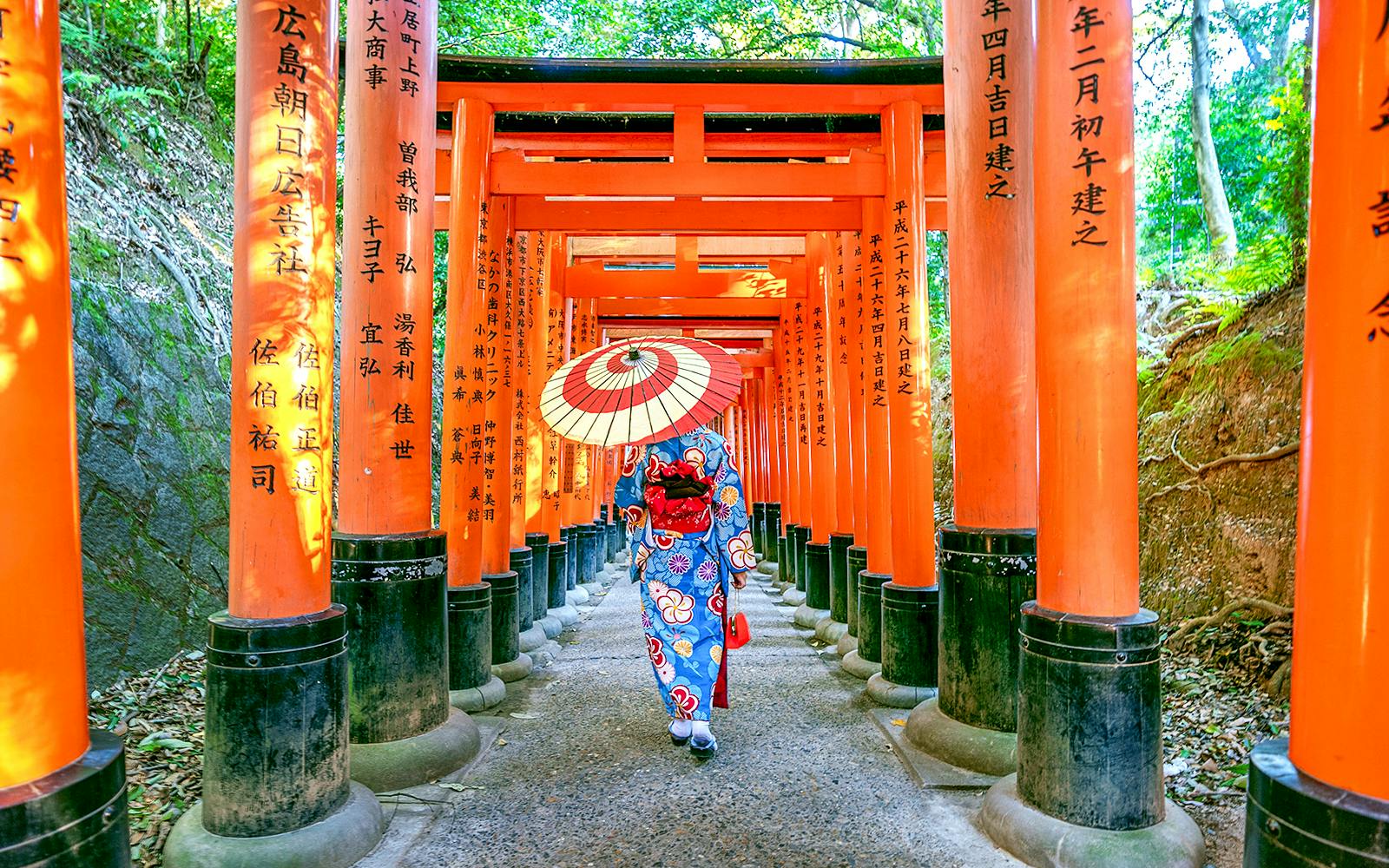
Japan
7N Japan Fixed Departure Group Tour
₹1,60,020
View →per adult
Every Indian needs a visa for Japan. Here is what it costs, which documents VFS wants, how long it takes and what to do if you are refused.
By Meera Rao, City Breaks Specialist · · Updated

Yes, every Indian passport holder needs a visa for Japan, and the tourist visa costs about Rs 1,300 a head through VFS Global (Rs 500 visa fee plus Rs 800 service charge, as of September 2026). Apply at least 7 to 10 working days before you fly, and earlier if you can, because neither VFS nor the embassy promises a fixed turnaround. Since April 2024 the visa comes as a "visa issuance notice" you show on a phone, not a sticker in your passport.
What did not change is the route: you still apply through VFS Global, as before. Keep the paperwork boring: a clean bank statement or ITR, a real itinerary, and flight and hotel details that match each other. That's the short version. The rest is what goes wrong and what the fine print says.
Japan does not offer visa-free entry or visa-on-arrival to Indian citizens, however short the trip. The default tourist visa is a Temporary Visitor Visa for a single entry, with no work allowed. The consulate decides whether to grant a stay of 15, 30 or 90 days, based on the itinerary you submit, so put your real trip length on it. Japan's eVisa FAQ also says the visa is valid for three months from the day it is issued.
There is a multiple-entry route too, but it goes by your travel record, not your plans, and it isn't the default. The eVisa covers only single-entry tourism, so ask VFS how a multiple-entry visa would be issued. Either way, the visa only gets you to the immigration counter. Landing permission is a separate call the officer makes when you arrive, which is standard practice everywhere and not a Japan-specific catch.
You don't apply to the embassy directly for a tourist visa. The embassy's visa page says to submit your application through VFS Global. Most Japan Visa Application Centres take walk-ins, but Bengaluru, Chennai, Cochin, Hyderabad, Puducherry, Kolkata and Bhubaneswar need a booked appointment on the VFS site. The embassy page still says no appointment is needed, so trust the VFS page for your city. VFS forwards your file to the Japanese mission that covers your state. Applications open three months before your travel date, and the embassy says it will not take anything earlier.
What comes back is electronic. There's no sticker in your passport. Instead you get a visa issuance notice, and at the airport you show it live on your phone or tablet, with an internet connection. The embassy says a PDF, photo, screenshot or printout will not be accepted. If your phone battery tends to give out before you board, this is the one part of the process to rehearse at home: open the notice, check that it loads, and carry a power bank.
The checklist for the standard tourism visa, without a guarantor in Japan, is shorter than people expect. Most of the friction is in getting the financial documents right, not in hunting down anything exotic. This follows VFS's tourism checklist, so check the VFS page before you apply in case it has changed. You'll need:
If you're a student or someone's dependent, add a consent letter from a parent or spouse, and use their ITR or bank statement instead of your own. If a dependent is travelling with you, carry proof of the relationship: a passport copy, marriage certificate or birth certificate, whichever fits. VFS says the embassy may ask for an interview or extra documents depending on your circumstances. None of the documents you submit are returned except the passport, so don't hand over anything you'd miss.
I'd treat the bank statement or ITR as the document that decides most borderline cases. A thin, erratic statement invites questions even when everything else is spotless. If your salary account looks messy, use a savings account with a steadier balance instead, and don't dress it up with a one-time deposit the week before you apply. That pattern is obvious to anyone who reads bank statements for a living.
As of September 2026, after the fee revision effective 1 July 2026, the Japan visa fee for Indian nationals is Rs 500, the same for single entry and for the multiple-entry categories. On top of that, VFS charges a service fee of Rs 800 per application, taxes included and non-refundable. So the number to budget is about Rs 1,300 per applicant. If you want your passport couriered back instead of collecting it in person, that's another Rs 550, optional. VFS says the visa fee is refunded only if the embassy does not approve the visa; the service charge is not.
Everything is paid in rupees, so you don't need foreign exchange for the visa itself. Most centres take cash or card. At the Gurugram, Chandigarh and Lucknow drop-off offices, VFS asks for separate demand drafts instead. Fees get revised, so check the VFS page on the day you apply.
The embassy's visa page carries a fraud warning: the visa itself costs only the visa fee and the service charge, and the embassy never asks for money by phone or email to verify documents or speed things up. It also says the process cannot be expedited or prioritised, so anyone selling you a fast track is selling something that does not exist.
Your state of residence decides which Japanese mission reviews your application, even though you submit everything through a local VFS centre:
So if you're applying from Hyderabad or Kochi, your file travels to Chennai, even though you drop it off closer to home. The Delhi embassy covers by far the widest area, followed by Mumbai. VFS says processing times are at the embassy's discretion, so a friend's timeline in another city is only a rough guide.
Neither VFS nor the embassy commits to a fixed number of days. VFS says processing times can increase or decrease at the embassy's discretion, and asks for a minimum gap of 7 to 10 working days between the day you apply and the day you travel. Japan's foreign ministry FAQ puts the standard examination period at five working days once your application is accepted. It also says this can run longer when many applications arrive at once, and that anything needing extra checks, such as an interview or more documents, can take a couple of weeks or more.
The part that swings is the queue, not the processing itself. Two windows tend to get busy: the cherry blossom weeks in spring, and the run-up to long Indian holidays such as Diwali. That is my guess from how travel bunches up, not a published VFS figure. Diwali in 2026 falls on 8 November, so if you're flying around then, apply as early as the three-month window allows. My rule: apply the day your documents are ready, not the week before you fly, and don't pay for non-refundable Japan hotels until the visa issuance notice is in hand. VFS wants to see your flight schedule, so book a fare you can cancel or change.
Ask about Japan on WhatsApp
Tell us where and when - a specialist replies with a plan and a price, usually within two hours.
The embassy does not share the reason for a refusal. Japan's foreign ministry FAQ says the application did not meet the criteria for issuing a visa and that no specific reason is given to individual applicants. The embassy's visa page adds that it takes no enquiries about reasons for refusal, so don't expect a letter explaining what went wrong. The waiting period is clear, though: VFS says that if your application is rejected, you can reapply in the same visa category only after six months from the date of rejection. The foreign ministry says it sometimes accepts an earlier reapplication when your circumstances have changed significantly and travel is necessary on humanitarian grounds, but you'd need to consult the embassy first. For an ordinary holiday, six months is the wall.
Since you won't get a reason, audit your own file before you reapply. Check that your itinerary dates match your flight schedule exactly, that your bank statement covers a full six months without gaps, that your ITR and your bank statement tell the same income story, and that a spouse or parent's consent letter is signed and dated if you're travelling as a dependent. Nobody outside the consulate knows the real reasons, so this is my judgement, not data: I'd look first at mismatched dates and thin financial proof.
Planning a second visit does not qualify you for multiple entry, because VFS decides on your record. If you fit a category, though, ask for it instead of single-entry. The fee is identical, Rs 500, so there's no cost reason to default to single-entry.
For leisure travellers, the categories VFS lists are travel records to Japan twice or more in the last three years, a single travel record to Japan in the last three years, travel records to Japan and a G7 country in the last three years, and sufficient financial capacity. There are also separate categories for business travel, intellectual figures, and spouses or children of people on a Japanese employment visa. Each category is listed as its own visa type on the VFS site, so confirm which one fits and what it asks for before you submit, rather than guessing and hoping VFS reclassifies the file for you.
A fixed-departure group tour takes care of one page of the file: the day-by-day itinerary comes already set, so you aren't inventing dates to fill a form. It does nothing for the document I'd worry about most, your ITR or bank statement. And since I'd hold off on non-refundable bookings until the visa is approved, check the tour's cancellation terms for a refused visa before you pay a deposit. The 7-night fixed departure below is one example.
Explore Japan tripsYes. Every Indian passport holder needs a visa for Japan, whatever the purpose of travel, and there is no visa-free or visa-on-arrival option. The standard tourist visa is a single-entry Temporary Visitor Visa, applied for through a VFS Global Japan Visa Application Centre and issued electronically instead of as a passport sticker. The consulate decides whether to grant a stay of 15, 30 or 90 days, based on your itinerary.
The visa fee for Indian nationals is Rs 500, the same for single or multiple entry. VFS Global adds a service charge of Rs 800 per application, so budget around Rs 1,300 per person, as of September 2026 and the fee revision effective 1 July 2026. An optional courier return costs another Rs 550. Charges are paid in rupees, and VFS says the visa fee is refunded only if the embassy does not approve the visa.
Neither VFS nor the embassy commits to an exact number of days. VFS asks for a gap of at least 7 to 10 working days between applying and travelling, and Japan's foreign ministry says the standard examination is five working days once your application is accepted. It can run to a couple of weeks or more if extra checks are needed, so apply as early as the three-month window allows.
You need a valid passport with more than two blank pages, photocopies of its first and last pages, a filled and signed visa application form, one recent passport photo, a document showing your flight schedule, a Japan itinerary with hotel details, and your latest ITR or six months of bank statements. Students and dependents also need a consent letter and the sponsor's financial documents.
The Japan eVisa is an electronic visa introduced for Indian applicants from 1 April 2024. You still apply at a VFS centre, but instead of a sticker in your passport you get a visa issuance notice that you show on your phone or tablet at the airport. It needs an internet connection to load, and the embassy says a PDF, screenshot or printout will not be accepted. Test that it opens before you leave home.
The Japan embassy does not disclose specific reasons for refusing an application. If yours is rejected, VFS Global's own guidance says you can reapply in the same visa category only after a six-month wait from the date of rejection. Since the reasons stay private, check before reapplying that dates match across every document, your financial proof is solid, and your itinerary is complete.
Yes, if you qualify. VFS lists multiple-entry categories based on your record: travel to Japan once, or twice or more, in the last three years, travel history to Japan and a G7 country, or proven financial capacity. The visa fee is the same Rs 500 as single-entry, so check whether you fit a category before you apply.
Written by
Meera Rao
City Breaks Specialist. Meera plans Singapore stopovers and short city breaks, with an eye on value, transit and what actually works for families travelling from India.
All guides by Meera →
Indians need a visa before flying to Singapore. Fees in rupees, documents, the SG Arrival Card, timelines and the mistakes that get files rejected.
What an Indian passport needs for Thailand: visa free rules, e visa fees in rupees, the digital arrival card and why travellers get stopped.
Want this Japan trip planned end to end?
Send your dates and group - a specialist replies with a day-by-day plan and a price.