
visa documents6 min read
Vietnam Visa for Indians: Rules, Fees and How to Apply
No visa free entry, one real portal, and the fee traps to dodge
By Kabir Nair, Southeast Asia Specialist · · Updated

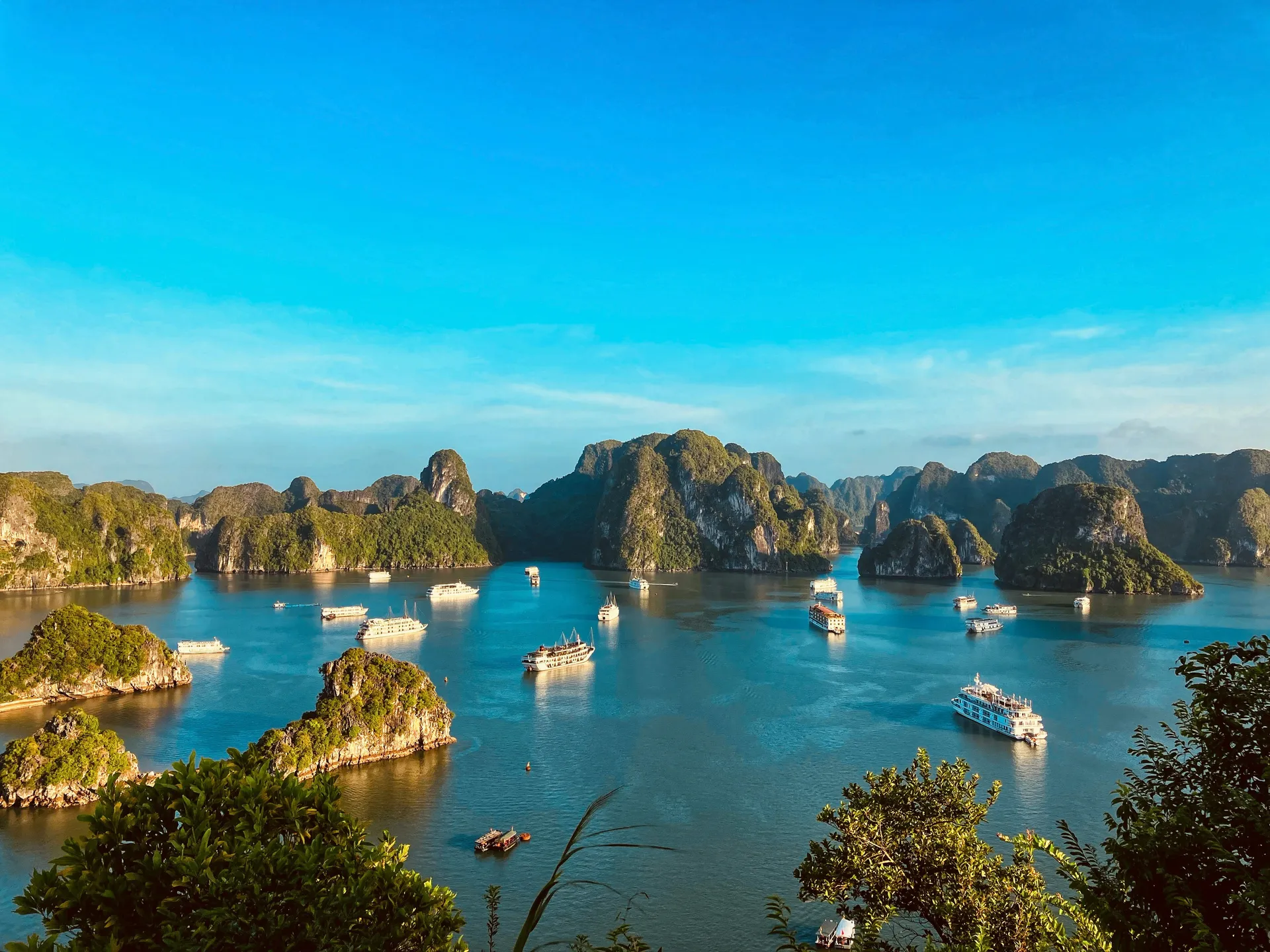
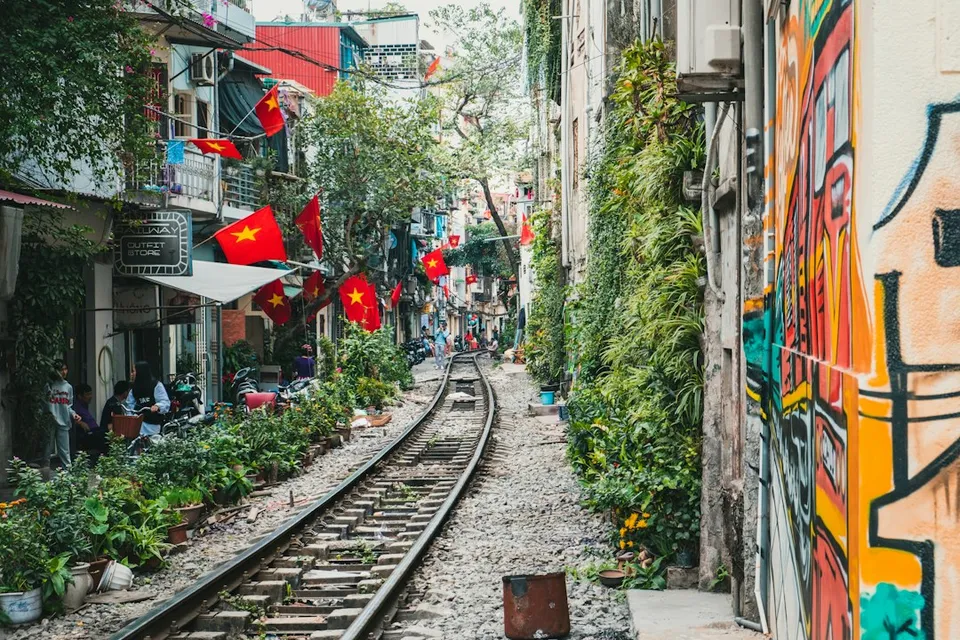
Photo by Markus Winkler on Unsplash
An Indian passport does not get you into Vietnam visa free, whatever a travel reel told you. For mainland Vietnam you arrange a visa before you fly, and for almost every Indian tourist that means the online e visa, applied for yourself on the government portal for roughly Rs 2,200 per person. The process is simple once you know which website is real and which fields trigger a rejection.
Vietnam visa for Indians: the short answer
- There is no visa free entry for Indians into mainland Vietnam. Lists mentioning "15 days visa free" apply to nationals of the UK, France, Germany, Japan and South Korea, not to India.
- The Vietnam e visa is the default route: valid up to 90 days, single or multiple entry, applied online before departure.
- Vietnam visa on arrival still exists, but it needs a pre-approval letter from a licensed agent inside Vietnam and only works if you land by air.
- Phu Quoc island has a separate 30 day exemption with strict routing conditions, covered below. This is where most guides quietly mislead you.
Vietnam e visa: fee, validity and how to apply
The only official site is evisa.gov.vn, run by the Vietnam Immigration Department. Search results are crowded with lookalike portals built from the same three words, charging Rs 5,000 to Rs 9,000 to fill in the same form for you. Type the address by hand.
Approximate Vietnam visa fee at the time of writing. Confirm the current number on the official portal before you pay:
- Single entry, up to 90 days: about USD 25, roughly Rs 2,200
- Multiple entry, up to 90 days: about USD 50, roughly Rs 4,400
- The fee is not refundable. If you are rejected, or you mistype your passport number, that money is gone.
- The fee is the same whatever stay length you request, so ask for a window wider than your booked dates.
The flow: create an account, upload a scan of your passport bio page and a portrait photo, fill in your dates plus entry and exit checkpoints, pay by card, then track status with the registration code. Official processing is three working days, but apply at least two weeks out, and three to four weeks around Tet (late January to mid February) when Vietnamese offices slow down.
Print the approved e visa in colour. Check-in staff at Delhi and Mumbai have refused boarding to travellers carrying it only on a phone.
Vietnam visa on arrival: who should skip it
Vietnam visa on arrival is not a walk-up service. You pay an agency in Vietnam for an approval letter, carry the printout, then pay a stamping fee in cash dollars at the airport, usually USD 25 single entry or USD 50 multiple. Add the agency charge of roughly USD 15 to USD 30 and it costs more than the e visa, and the counter queue at Noi Bai or Tan Son Nhat can run 45 minutes at peak. It works only at air borders, so it is no help if you cross overland from Cambodia or Laos.
Skip it unless you fly within 72 hours and cannot risk online processing, or your e visa was rejected and there is no time to reapply.
Ask our Vietnam team about your visa on WhatsApp
Tell us where and when - a specialist replies with a plan and a price, usually within two hours.
The Phu Quoc rule most guides get wrong
Phu Quoc offers 30 days visa free, which plenty of articles present as a free pass for Indians. The catch is routing. You must arrive at Phu Quoc on an international flight, or transit through another Vietnamese airport without formally entering the country. Land in Ho Chi Minh City, clear immigration and take a domestic hop, and the exemption is void, because you needed a visa at that first airport.
With no regular direct flight from an Indian metro to Phu Quoc, using this means routing via Singapore or Bangkok, and it pins you to the island. Adding Hanoi or Hoi An means a normal e visa anyway.
Documents to keep ready
- Passport valid at least six months beyond your arrival date, with two blank pages
- A colour scan of the bio page with all four corners visible and no glare
- A recent portrait photo, white background, no spectacles, neutral expression
- The name and address of your first hotel, for the temporary residence field
- Your exact entry and exit checkpoints, decided before you start the form
- Return ticket and hotel bookings, occasionally asked for at immigration
- A card enabled for international online payments
- A separate application for each child, including infants
Arrival formalities
There is no routine online arrival form or health declaration for tourists any more. You hand over your passport and printed e visa, give a photo and fingerprints, and collect the entry stamp. A customs declaration is needed only above the limits, broadly cash or equivalent over USD 5,000 and gold over 300 grams. Keep your hotel address handy.
Why applications get rejected or delayed
- Name fields filled in wrong. Many Indian passports carry a blank surname line, and applicants then split or swap names. Reproduce the passport exactly.
- A cropped, dark or glare-heavy passport scan. This is the single most common reason for a resubmission.
- Choosing an entry checkpoint you do not actually use. You cannot amend it later, you reapply and pay again.
- A passport that drops under six months of validity by your arrival date.
- Card payment failing on the portal. Indian cards sometimes bounce, so keep a second card ready.
- A previous overstay in Vietnam on record.
Know before you go
- Direct flights run from Delhi, Mumbai and Kolkata to Hanoi and Ho Chi Minh City on IndiGo, VietJet and Vietnam Airlines, return fares often around Rs 20,000 to Rs 35,000 off peak.
- Overstaying even by a day means a fine and paperwork at the airport, and extensions from inside Vietnam are slow and expensive, so build in a buffer.
- Vegetarians should learn "an chay" (vegetarian) and "khong nuoc mam" (no fish sauce), which hides in most savoury dishes. Buddhist com chay canteens are cheap and everywhere, and Hanoi's Old Quarter and District 1 in Ho Chi Minh City both have Indian restaurants.
- Carry a little US dollar cash for emergencies, but pay daily costs in dong drawn from an ATM.
- Rules, fees and checkpoint lists change without much warning. Confirm everything on evisa.gov.vn before you pay.
Sort the visa in the first week of planning. It is the cheapest part of a Vietnam trip and the only part that can stop you at the gate.
Related Vietnam Travel Guides
Planning a trip to Vietnam? Check out our tested guides for real Indian traveler budgets, day-by-day itineraries, and insider tips:
- Complete Planning Guide: Vietnam Trip from India: The Complete Planning Guide
- Trip Budget & Currency (VND): Vietnam Trip Cost from India: A Real Budget Breakdown
- 10-Day North-to-South Route: 10 Days in Vietnam: A North to South Itinerary
- Travel Tips & Vegetarian Food: Vietnam Travel Tips for Indians: Money, SIM & Food
Questions people ask
What is the official website for Vietnam e-Visa to avoid scam websites?
The only official government portal for Vietnam e-Visa is evisa.xuatnhapcanh.gov.vn (or the National Public Service Portal). Beware of commercial third-party websites with similar names that charge $50 to $100 for the same $25 government service.
How much is the Vietnam e-Visa fee for Indian citizens?
The official fee is $25 USD (~Rs 2,100) for a 30-day or 90-day single-entry e-Visa, and $50 USD (~Rs 4,200) for a 90-day multiple-entry e-Visa. Fees are paid online via credit/debit card on the government portal.
What documents and photo requirements are needed for a Vietnam e-Visa?
You need: 1) A clear color scan/photo of your Indian passport biographical page (valid for at least 6 months); 2) A digital passport-style portrait photo (4x6 cm, white background, no glasses, neutral expression, JPG format under 2MB).
How long does it take to process a Vietnam e-Visa for Indians?
Standard processing takes 3 to 4 full business days (excluding weekends and Vietnamese national holidays). It is recommended to apply at least 10 to 14 days before your departure date.
Can you get a Visa on Arrival at the airport in Vietnam without an e-Visa?
No. Vietnam no longer issues on-the-spot Visa on Arrival at airport counters without a pre-approved Visa Approval Letter issued by Vietnam Immigration in advance. Applying for an e-Visa online beforehand is mandatory.
What are the most common reasons for Vietnam e-Visa rejection or delays?
1) Incorrectly entering Full Name (failing to follow the ICAO passport format); 2) Submitting blurry or cropped passport scans; 3) Uploading selfie photos with shadows or wearing spectacles; 4) Inaccurate entry/exit port selections.
Do children and infants need a separate e-Visa for Vietnam?
Yes, every travelling individual including infants and children with their own passport requires an individual e-Visa application and fee.
Can a Vietnam 90-day e-Visa be used for multiple entries?
Yes, if you select the "Multiple Entry" option during your application and pay the $50 fee, you can exit and re-enter Vietnam freely (e.g. taking a side trip to Cambodia or Laos) within the 90-day validity.
Written by
Kabir Nair
Southeast Asia Specialist. Kabir builds Thailand and Vietnam trips for first-timers and repeat visitors, from island-hopping in the Andaman to overland routes down Vietnam.
All guides by Kabir →02More from Vietnam
- 01Halong Bay Cruise with Indian Food: Price in Rupees9 min
- 02Phu Quoc Trip Cost from India: 5 Days for Two in 202611 min
- 03Phu Quoc Visa Free for Indians: When It Works, When It Doesn't8 min
- 04Vietnam 5 Days Trip Cost from India: Two 4-Night Plans Priced10 min
- 05Exploring the Mekong Delta: Floating Markets, Villages & Local Life3 min
- 06Vietnam Honeymoon Guide (2026): Phu Quoc Resorts, Halong Cruises & Real Costs
03Popular packages
All 5 →
04Nearby destinations
05You might also like
destination guides6 min read
Vietnam Trip from India: The Complete Planning Guide
How long to go, what it costs in rupees, when to travel, where to base yourself and how to book a Vietnam trip from India.
Kabir Nair

trip costs6 min read
Vietnam Trip Cost from India: A Real Budget Breakdown
Three honest Vietnam budgets in rupees for Indian travellers: flights, transport, stay, food, day trips, e-visa and insurance.
Kabir Nair
Planning a Vietnam trip?
Tell us where and when - a specialist replies with a plan and a price, usually within two hours.