


when to visit4 min read
Best Time to Visit Vietnam: A Region by Region Guide
How to time a north-to-south trip around three very different climate zones.
By Kabir Nair, Southeast Asia Specialist · · Updated

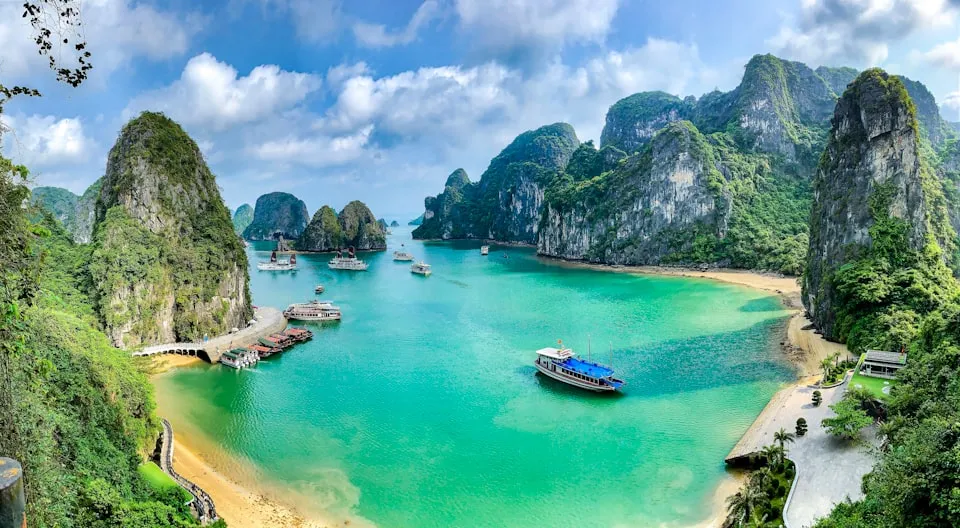
Photo by Silver Ringvee on Unsplash
Vietnam runs more than 1,600 km from top to bottom, so there is no single best time to visit Vietnam that works everywhere at once. The country sits across three climate zones, which is why it can be pouring in Hoi An while Hanoi stays dry and bright on the same afternoon. That mismatch quietly wrecks a lot of first Vietnam trips: you book a neat two-week north-to-south loop, then watch the central leg vanish under rain. This guide breaks Vietnam weather down zone by zone, names the windows that actually line up, and flags the Vietnam seasons worth dodging.
The short answer: when to go to Vietnam
If you remember one thing, make it this: February to April is the safest window for a trip covering north, central and south in one go. In those months every region is reasonably dry and warm at the same time, which almost never happens otherwise. Broadly, the north and south share a dry season from late November to April, while the central coast runs on the opposite calendar and is wettest from September to December. Once you see that flip, the route plans itself.
North Vietnam: Hanoi, Sapa and Halong Bay
The north has four real seasons, unlike the tropical south.
- Best: October to December (cool, dry, clear skies) and March to April (mild spring).
- Winter (January to February): genuinely cold, often 10°C to 16°C in Hanoi. Sapa can drop close to freezing, with mist sitting in the valleys and, in a rare year, frost or a dusting of snow up top. Pack a proper jacket, not a hoodie.
- Summer (June to August): hot and sticky, regularly above 35°C, with heavy downpours and a real typhoon risk that can cancel Halong Bay cruises at a day's notice.
For Sapa's rice terraces, the fields stay lush green all through the wet summer, but the famous golden harvest lands mid-September to early October, which overlaps neatly with the north's clearest spell. That one week is the sweet spot most guides bury.
Central Vietnam: Hoi An, Da Nang and Hue
This is the region that catches people out. The central coast is dry and hot from roughly February to August, with the best beach weather in Da Nang and Hoi An from April to July, when the sea is calm and the sun reliable.
Then it flips hard. From September to December the rains arrive, and October and November are the worst of it. Hoi An's old town floods most years, sometimes badly enough that you get around the lantern-lit streets by boat, and typhoons track straight into this coast. The annoying part is that this soggy stretch is exactly when the north and south look their best. If your dates are locked for November, do the north and south properly and keep central short, or skip the beach days entirely and treat Hoi An as a one-night tailoring-and-food stop.
Ask our Vietnam team to time your route on WhatsApp
Tell us where and when - a specialist replies with a plan and a price, usually within two hours.
South Vietnam: Ho Chi Minh City, the Mekong and Phu Quoc
The south is straightforward tropical: warm all year, usually 26°C to 34°C, with just two seasons.
- Dry season (December to April): the clear best time, especially December to March. Blue skies for Ho Chi Minh City, the Mekong Delta and Phu Quoc's beaches.
- Wet season (May to October): do not write it off. The rain usually comes as one heavy afternoon burst of an hour or so, then clears, rather than an all-day washout. Prices are lower and the delta is green and brimming.
Phu Quoc, the beach island in the far south, follows the same rhythm and peaks from November to April. If white-sand beach time is the whole reason for the trip, build the itinerary around Phu Quoc's dry months first, then slot everything else in.
Best overall windows and what to avoid
- Best all-rounder: February to April. Dry almost everywhere.
- Strong for north and south, risky for central: November to December.
- Avoid the central coast in October and November if beaches and Hoi An are the point of the trip.
- Avoid Halong Bay cruises from July to September, when typhoons cause the most cancellations.
- Watch the Tet holiday (Lunar New Year, around 17 February in 2026). It is a wonderful time to see the country celebrate, but many family-run shops, restaurants and services shut for several days, and domestic flights and hotels get pricey and packed. Book well ahead or plan around the first few days.
Know before you go
- Indian passport holders can apply online for Vietnam's e-visa, so sort it before you fly.
- Direct flights run from Delhi, Mumbai and Kolkata to Hanoi and Ho Chi Minh City on VietJet, IndiGo and Vietnam Airlines, taking roughly 5 to 6 hours. Return fares typically sit around INR 15,000 to 30,000 (approximate), climbing over Tet and the December peak.
- Doing north and south in winter means packing for two climates: a warm layer for Hanoi and Sapa, beachwear for the south.
- Fly into one end and out of the other (Hanoi in, Ho Chi Minh City out, or the reverse) so you are not backtracking across the country.
- Build central Vietnam around the weather, not your itinerary's convenience, especially between September and December.
Related Vietnam Travel Guides
Planning a trip to Vietnam? Check out our tested guides for real Indian traveler budgets, day-by-day itineraries, and insider tips:
- Complete Planning Guide: Vietnam Trip from India: The Complete Planning Guide
- e-Visa Application Guide: Vietnam Visa for Indians: Rules, Fees & e-Visa Guide
- Trip Budget & Currency (VND): Vietnam Trip Cost from India: A Real Budget Breakdown
- 10-Day North-to-South Route: 10 Days in Vietnam: A North to South Itinerary
Questions people ask
What is the best overall time of year to visit Vietnam?
March to April and October to November are the best months to visit Vietnam nationwide, providing mild, dry weather in the North (Hanoi), sunny beaches in Central Vietnam (Da Nang, Hoi An), and warm sunshine in the South (Saigon).
How does the weather differ between North, Central, and South Vietnam?
Vietnam has three distinct climate zones: North Vietnam (Hanoi, Sapa, Ha Long Bay) has 4 seasons with chilly, misty winters (12°C–18°C from Dec to Feb) and warm summers; Central Vietnam (Da Nang, Hoi An) is sunny from Feb to Aug but gets heavy monsoon rains from Sep to Nov; South Vietnam (Saigon, Mekong) is tropical and warm (28°C–34°C) year-round with a rainy season from May to Nov.
When is the best time to visit Ha Long Bay and Lan Ha Bay for cruising?
March to May and September to November offer clear blue skies, calm waters, and comfortable temperatures for kayaking and swimming in the bay.
When is the rainy and typhoon season in Central Vietnam (Da Nang & Hoi An)?
September to November is the peak rainy and typhoon season in Central Vietnam. Hoi An Ancient Town can experience seasonal river flooding during heavy storms, so visiting between February and August is recommended for beach trips.
What are the cheapest months to visit Vietnam from India?
May, June, and September offer the lowest international airfares and hotel promotional deals.
Does it get cold in North Vietnam (Hanoi & Sapa) in winter?
Yes! From December to February, Hanoi temperatures can drop to 10°C to 15°C with cool winds, and mountainous Sapa can drop below 5°C with occasional frost. Packing a warm winter jacket is essential.
What is Tet (Vietnamese Lunar New Year) and should tourists travel during it?
Tet is Vietnam's biggest annual festival (usually in late January or February). While cultural atmosphere is festive, many local restaurants, shops, and museums close for 4 to 7 days, and internal transport tickets sell out weeks in advance.
When is the best time to visit the golden rice terraces in Sapa and Mu Cang Chai?
Late August to early October is the harvest season, when the terraced rice fields turn vibrant golden yellow and the weather is crisp and clear.
Written by
Kabir Nair
Southeast Asia Specialist. Kabir builds Thailand and Vietnam trips for first-timers and repeat visitors, from island-hopping in the Andaman to overland routes down Vietnam.
All guides by Kabir →02More from Vietnam
- 01Halong Bay Cruise with Indian Food: Price in Rupees9 min
- 02Phu Quoc Trip Cost from India: 5 Days for Two in 202611 min
- 03Phu Quoc Visa Free for Indians: When It Works, When It Doesn't8 min
- 04Vietnam 5 Days Trip Cost from India: Two 4-Night Plans Priced10 min
- 05Exploring the Mekong Delta: Floating Markets, Villages & Local Life3 min
- 06Vietnam Honeymoon Guide (2026): Phu Quoc Resorts, Halong Cruises & Real Costs
03Popular packages
All 5 →

04Nearby destinations
05You might also like

destination guides6 min read
Vietnam Trip from India: The Complete Planning Guide
How long to go, what it costs in rupees, when to travel, where to base yourself and how to book a Vietnam trip from India.
Kabir Nair

itineraries6 min read
10 Days in Vietnam: A North to South Itinerary
A day-by-day 10 days in Vietnam plan, north to south, with timings, honest trade-offs and food to try.
Kabir Nair
Planning a Vietnam trip?
Tell us where and when - a specialist replies with a plan and a price, usually within two hours.