

travel tips6 min read
Vietnam Travel Tips for Indians: Money, SIM, Food and Etiquette
Currency, SIM, plugs, veg food and etiquette, sorted before you land in Hanoi
By Kabir Nair, Southeast Asia Specialist · · Updated
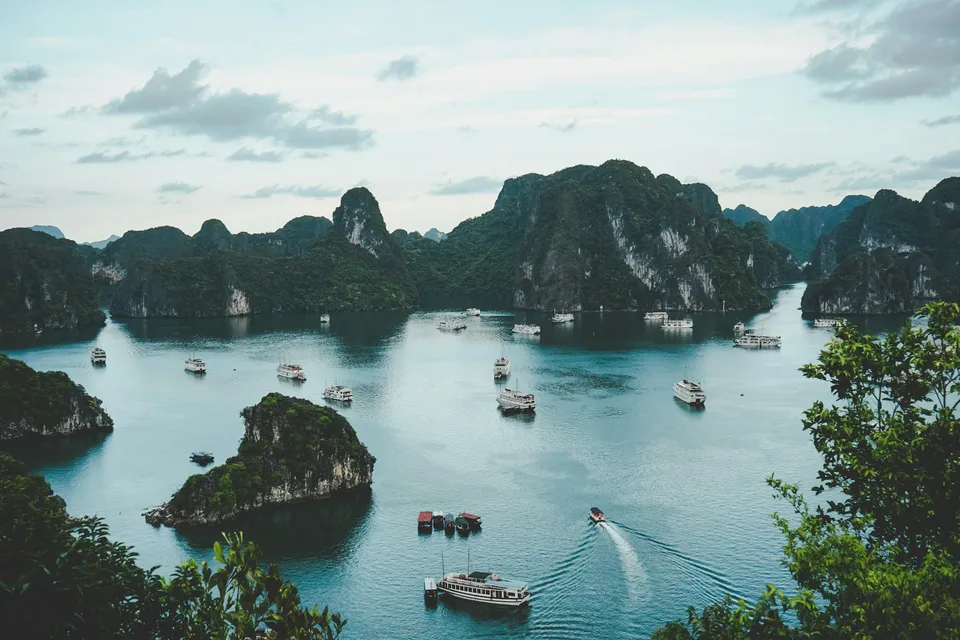
Photo by Andrea Leopardi on Unsplash
Vietnam is one of the easiest countries to travel on an Indian passport, and most of a ten day trip runs smoothly. What catches people out is the small stuff: rupees nobody will change, a quiet card surcharge in Hoi An, a SIM that dies the moment you reach Sapa, a vegetable pho built on beef bone broth. These are the vietnam travel tips we repeat to clients flying out of Delhi, Mumbai and Bengaluru.
Money: the dong, and why you carry dollars
The vietnam currency is the dong (VND), and rates move, so check on the day. Roughly, Rs 1 buys 290 to 300 VND, so 100,000 VND is about Rs 340 (approximate).
- Rupees are close to useless there. Few exchangers accept INR, and those who do quote badly. Carry crisp, unmarked 100 dollar notes, which fetch a better rate than 20s and 50s.
- Change at gold shops, not the airport. Ha Trung street in Hanoi's Old Quarter and the gold dealers near Ben Thanh market beat airport counters by a few percent. Change only 30 to 50 dollars on landing.
- Count the zeros. The 20,000 and 500,000 notes are both blue, and the 10,000 and 200,000 both lean brown. Slow down every time you pay.
- Watch the TCS threshold. Large forex purchases in India can attract it; confirm the current slab with your bank before you load up.
Cards, ATMs and the UPI question
Cards work at hotels, malls such as Vincom and Lotte, chain restaurants and inside Grab. Street stalls, markets, cyclos and small cafes are cash only, and many small merchants add a 2 to 3 percent card surcharge that only shows up at the bill.
UPI does not work in Vietnam. The country runs VietQR on the NAPAS network, and cross border QR tie ups keep getting announced without anything a tourist can actually use yet.
ATMs charge roughly 22,000 to 60,000 VND per withdrawal and cap you at 2 to 5 million VND, on top of your bank's 3 to 3.5 percent markup. A zero markup forex card works out cheapest, with dollars as backup.
Getting a vietnam sim card that works outside the cities
Viettel, Vinaphone and Mobifone are the three networks. Viettel has the widest coverage and is the one that still holds a signal in Sapa, Ha Giang and Phu Quoc. A tourist vietnam sim card with 30 days of data costs roughly 150,000 to 300,000 VND, about Rs 500 to Rs 1,000, far below an Indian roaming pack.
- Buy at arrivals at Noi Bai, Tan Son Nhat or Da Nang; town stores are barely cheaper and cost you time.
- Carry your passport, since SIM registration is mandatory.
- An eSIM bought before you fly gives you data the minute you land.
- Set up Grab and save offline Google Maps before departure.
Chat with our Vietnam experts on WhatsApp
Tell us where and when - a specialist replies with a plan and a price, usually within two hours.
Plugs and chargers
Vietnam runs 220V at 50Hz, same as India, so no converter is needed. Sockets take two flat pins or two round pins, so Indian two pin round chargers fit while the chunky three pin plug does not. Carry one universal adapter; power banks travel in cabin bags only.
Indian and vegetarian food, plus the pho trap
Indian food is easy in the big stops and thin everywhere else. Hanoi's Old Quarter has Namaste Hanoi and Foodshop 45, District 1 in Ho Chi Minh City has Ganesh and Baba's Kitchen, and Da Nang, Hoi An and Phu Quoc each have one too. Budget 200,000 to 400,000 VND a head, about Rs 700 to Rs 1,400. Sapa and Ha Giang are where theplas and ready to eat packets earn their space in your bag.
For local vegetarian food, look for Quan Chay or Com Chay signs, Buddhist kitchens where a tray meal runs 40,000 to 80,000 VND.
Here is what most guides get wrong: they tell you to order pho without the meat. Pho broth is simmered beef or chicken bone, so that bowl is still not vegetarian. Fish sauce hides in most dipping sauces and many stir fried vegetables, and fresh spring rolls usually contain shrimp. Say toi an chay (I eat vegetarian) and khong nuoc mam (no fish sauce), and ask for pho chay by name.
Tipping, bargaining and one thing to skip
Vietnam is not a tipping culture, and the 10 percent habit borrowed from American blogs is not expected; better restaurants already add about 5 percent service and 8 to 10 percent VAT. Round up for a Grab driver, give 20,000 to 50,000 VND to a bellhop and 50,000 to 100,000 VND after a massage. Bargain at Ben Thanh and Dong Xuan, opening near half, but never in restaurants or malls.
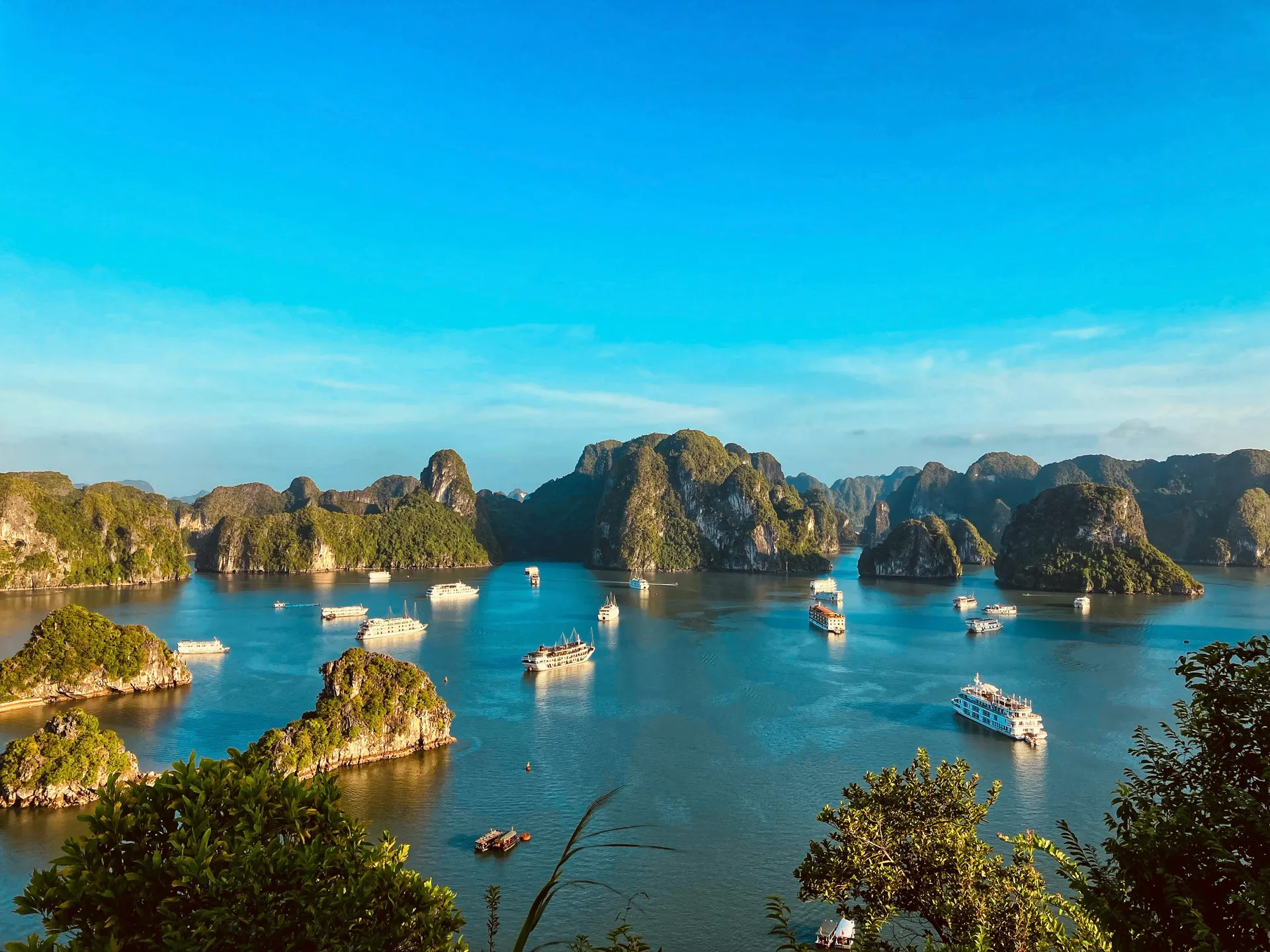
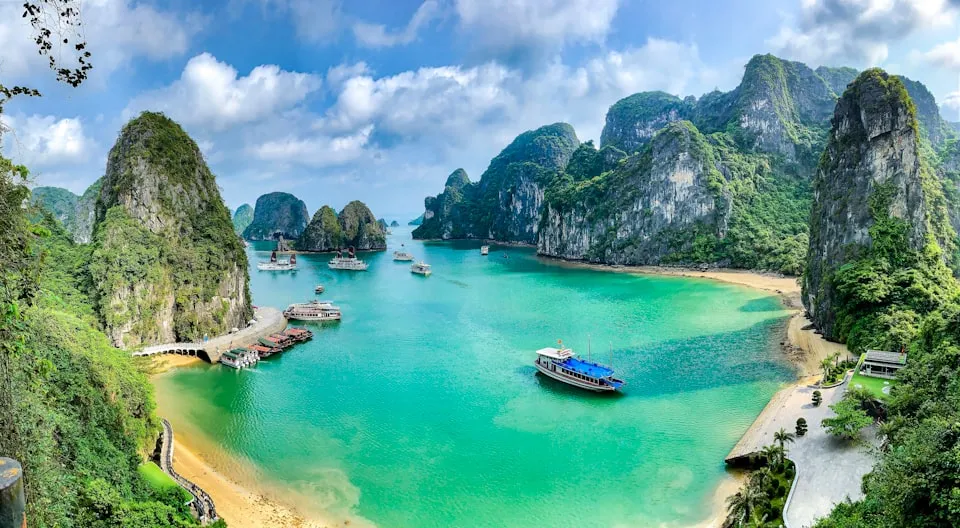
Skip this: the Ha Long Bay day trip from Hanoi. It is eight hours in a vehicle for four hours on the water at the most crowded time of day. Take an overnight cruise instead, or go via Cat Ba to the quieter Lan Ha Bay.
Etiquette and dress
- Cover shoulders and knees at pagodas: Tran Quoc in Hanoi, Thien Mu in Hue, Linh Ung in Da Nang.
- The Ho Chi Minh Mausoleum is the strictest stop: no shorts, no sleeveless tops, no bags or cameras inside, no talking. It also shuts for maintenance part of each year, so check dates.
- Shoes come off in homes and homestays, pass money with both hands, and never raise your voice, since public anger loses you the argument. Swimwear belongs on My Khe and Phu Quoc beaches, not on the walk into town.
Safety and traffic
Vietnam is broadly safe, including for solo women. The real risks are narrow and worth knowing.
- Bag snatching from moving motorbikes happens in Ho Chi Minh City, mostly District 1 and Pham Ngu Lao. Wear a cross body bag on the pavement side, phone away from the kerb.
- Crossing the road: walk at a slow, steady pace without stopping or stepping back. Riders flow around you; freezing halfway is what causes accidents.
- Taxis: use Grab, Xanh SM, Mai Linh or Vinasun, not the lookalike liveries parked outside airports.
- Motorbike rental: India issues the 1949 Geneva convention permit while Vietnam works off the 1968 convention, so an Indian IDP is usually not valid to ride on and an insurer can reject a claim. Use Grab bikes instead.
Know before you go
- Vietnam is 1 hour 30 minutes ahead of IST, and tap water is not drinkable.
- Apply for the e-visa only on the official Vietnamese government portal and confirm the fee there; lookalike agent sites charge several times more.
- Direct flights run from Delhi, Mumbai, Kolkata, Ahmedabad, Bengaluru and Hyderabad to Hanoi, Ho Chi Minh City and Da Nang, with return fares often Rs 22,000 to Rs 40,000 (approximate).
- Pack a rain poncho, mosquito repellent, ORS, motion sickness tablets for the Sapa and Ha Giang roads, and a fleece for Sapa in winter.
- Keep 200,000 to 500,000 VND in small notes daily, and carry your hotel address in Vietnamese for drivers.
Related Vietnam Travel Guides
Planning a trip to Vietnam? Check out our tested guides for real Indian traveler budgets, day-by-day itineraries, and insider tips:
- Complete Planning Guide: Vietnam Trip from India: The Complete Planning Guide
- e-Visa Application Guide: Vietnam Visa for Indians: Rules, Fees & e-Visa Guide
- Trip Budget & Currency (VND): Vietnam Trip Cost from India: A Real Budget Breakdown
- 10-Day North-to-South Route: 10 Days in Vietnam: A North to South Itinerary
Questions people ask
How should Indian travellers carry and exchange money in Vietnam?
Carry $150 to $200 in clean, unmarked USD cash notes to exchange for Vietnamese Dong (VND) at airport exchange kiosks or gold shops (e.g. Ha Trung street in Hanoi) for top exchange rates. Use zero-forex debit cards (Niyo, Fi) for ATM withdrawals at bank branches like VPBank, BIDV, or VietinBank.
How do you get a mobile internet SIM card or eSIM in Vietnam?
Viettel and Vinaphone are the top telecom networks in Vietnam with excellent 4G/5G coverage. You can buy a 30-day tourist prepaid SIM card at Hanoi or Saigon airports for 250,000 to 350,000 VND (Rs 850 to Rs 1,200) offering 4GB to 6GB of high-speed data per day. Alternatively, install an eSIM before departure.
How do Indian vegetarians order pure vegetarian food in Vietnam?
Look for the sign "Quán Ăn Chay" (Vegetarian Eatery) or say "Tôi ăn chay" (I am vegetarian). Specify "Không nước mắm" (No fish sauce) and "Không thịt" (No meat). Dedicated Indian and Jain restaurants are plentiful in Hanoi, Da Nang, Hoi An, and Saigon.
How do you book taxis safely and avoid scams in Vietnam?
Always use the Grab app for car and bike bookings to ensure upfront fixed pricing and GPS navigation. If taking a street taxi, only use reputable metered taxi companies: Mai Linh (Green taxis) or Vinasun (White taxis).
What electrical plug type is used in Vietnam and do I need an adapter?
Vietnam uses Type A (US 2-pin flat), Type C (European 2-pin round), and Type G (UK 3-pin) sockets at 220V/50Hz. Most Indian 2-pin mobile phone chargers plug directly into Vietnamese wall sockets without an adapter.
Is Vietnam safe for Indian solo travellers and families?
Vietnam is one of the safest countries in the world with extremely low violent crime rates. Standard tourist precautions apply: hold phones and handbags securely when near busy roads to prevent drive-by scooter snatches, and cross streets slowly with steady, predictable movements.
What is the tipping culture in Vietnam?
Tipping is not customary in local Vietnamese restaurants, but tipping tour guides (100,000–200,000 VND / Rs 350–700 per day), private drivers, and spa therapists is customary and appreciated.
What are the rules for crossing the road in Vietnam with heavy scooter traffic?
Cross with confidence at a steady, predictable walking pace. Do not make sudden stops, run, or step backwards; oncoming scooter riders will anticipate your walking trajectory and smoothly maneuver around you.
Written by
Kabir Nair
Southeast Asia Specialist. Kabir builds Thailand and Vietnam trips for first-timers and repeat visitors, from island-hopping in the Andaman to overland routes down Vietnam.
All guides by Kabir →02More from Vietnam
- 01Halong Bay Cruise with Indian Food: Price in Rupees9 min
- 02Phu Quoc Trip Cost from India: 5 Days for Two in 202611 min
- 03Phu Quoc Visa Free for Indians: When It Works, When It Doesn't8 min
- 04Vietnam 5 Days Trip Cost from India: Two 4-Night Plans Priced10 min
- 05Exploring the Mekong Delta: Floating Markets, Villages & Local Life3 min
- 06Vietnam Honeymoon Guide (2026): Phu Quoc Resorts, Halong Cruises & Real Costs
03Popular packages
All 5 →
04Nearby destinations
05You might also like
destination guides6 min read
Vietnam Trip from India: The Complete Planning Guide
How long to go, what it costs in rupees, when to travel, where to base yourself and how to book a Vietnam trip from India.
Kabir Nair

visa documents6 min read
Vietnam Visa for Indians: Rules, Fees and How to Apply
What Indians actually need for Vietnam: e visa vs visa on arrival, fees in rupees, documents to carry, and why applications get rejected.
Kabir Nair
Planning a Vietnam trip?
Tell us where and when - a specialist replies with a plan and a price, usually within two hours.