


JapanView
7N Japan: Cherry Blossom Special | With Flights Ex Mumbai / Ex Delhi / Ex Bangalore
7 nights
₹2,94,400per adult
How to see Japan's sacred mountain with crystal clarity: Lake Kawaguchiko vs Hakone compared, Shinkansen seat hacks, and seasonal photo spots.
By Meera Rao, City Breaks Specialist · · Updated

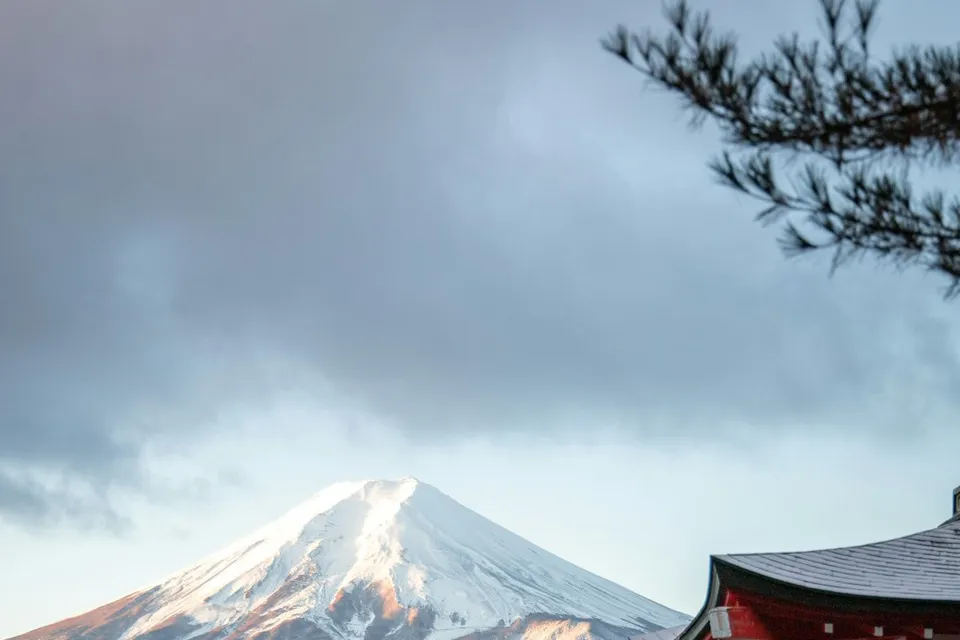
Photo by Clay Banks on Unsplash
For almost every traveller visiting Japan, seeing the snow-dusted, symmetrical cone of Mount Fuji (Fujisan) is an absolute bucket-list dream. Rising 3,776 meters above sea level, Japan's tallest and most sacred peak is a UNESCO World Heritage cultural icon.
Yet, countless tourists return disappointed, having spent an entire day staring into thick grey fog. Mount Fuji is notoriously elusive; local meteorologists report that the summit is obscured by clouds on more than 60% of summer afternoons.
To witness Fujisan in all its glory, you need more than luck: you need the right destination, the right time of day, and the right transit strategy. In this complete guide, we compare Lake Kawaguchiko against Hakone, break down the best photography viewpoints, and reveal the bullet train seat hack that gives you mountain views from your window.
When planning a Mount Fuji day trip from Tokyo, travellers always debate between two famous regions: Lake Kawaguchiko (Fuji Five Lakes) and Hakone. While both sit near the mountain, they offer fundamentally different experiences.
| Feature | Lake Kawaguchiko (Fuji Five Lakes) | Hakone |
|---|---|---|
| Distance to Fuji | Very Close (Lakeside base, 15 km away) | Further Away (Scenic mountain pass, 30 km away) |
| View Certainty | High (Massive, unobstructed foreground views) | Moderate (Fuji is often hidden behind mountain ridges) |
| Primary Vibe | Postcard photography, lake strolls, flower parks | Hot spring ryokans, ropeways, open-air art museums |
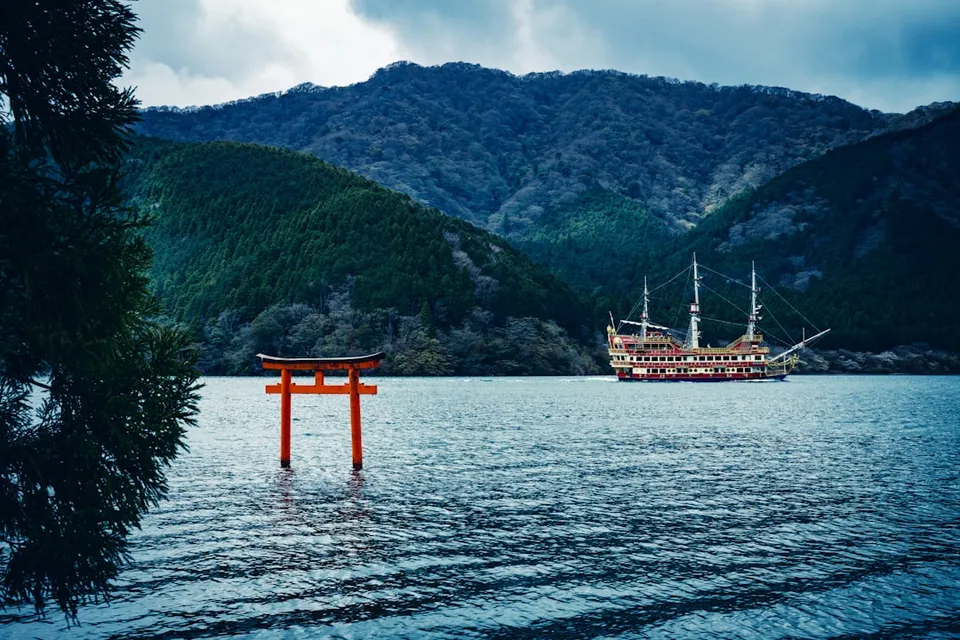
| Top Sight | Chureito Pagoda & Oishi Park | Owakudani volcanic valley & Lake Ashi Pirate Ship |
| Getting There | Direct Fuji Excursion train from Shinjuku (1h 55m) | Odakyu Romancecar express from Shinjuku (1h 30m) |
| Best For | Dedicated Mount Fuji photos and lake scenery | Hot spring relaxation, romantic couples, museum lovers |
If you head to Kawaguchiko, here are the top spots to visit in chronological order:
This is the quintessential image of Japan found on travel brochures worldwide: a vibrant red five-story pagoda framed by Mount Fuji in the background.
Located on the northern shoreline, Oishi Park offers a wide promenade where colorful flower fields stretch directly toward the lake, with Mount Fuji rising dramatically across the water. Depending on the season, you will see pink moss phlox in spring, purple lavender in early summer, or bright crimson kochia bushes in autumn.
Glide 400 meters up the slope of Mount Tenjo in an observation cable car (round-trip ticket is ¥1,000 / ~₹610). From the observation deck at 1,075 meters, you can view the entire lake basin and the majestic northern ridge of Mount Fuji.
If you are traveling in autumn (late October through mid-November), the Momiji Corridor on the north shore of Kawaguchiko is unmissable. Over 60 Japanese maple trees form an arching canopy of fiery crimson and golden leaves above a babbling river canal. In the evening, the trees are illuminated by warm spotlights, creating a breathtaking contrast against the cool silhouette of Mount Fuji across the water. Entry is free of charge.
For travellers seeking a serene setting away from tour bus crowds, take the local green retro bus from Kawaguchiko Station to Lake Saiko (25 minutes). This restored heritage village features 20 traditional thatched-roof farmhouses where local artisans weave silk, craft pottery, and serve soba noodles, all framed directly against Mount Fuji's western peak. Entry is ¥500 (~₹305).
Avoid navigating confusing suburban train transfers. Book the JR Fuji Excursion (Fuji Kaiyu):
If you are traveling on the Tokaido Shinkansen bullet train between Tokyo and Kyoto or Osaka, you do not even need to get off the train to see Mount Fuji:
Visibility varies dramatically by season due to atmospheric humidity:
Before boarding an early morning train from Tokyo, never rely on a generic weather app predicting "partly cloudy". Instead, check the official Yamanashi Prefectural Mount Fuji Live Cam network online. These automated cameras update every 5 to 10 minutes from Chureito Pagoda, Lake Kawaguchiko, and Lake Yamanaka. If the peak is shrouded in thick morning mist on the live camera by 6:30 AM, swap your day trip with an indoor Tokyo museum day and try again the following morning.
For a smooth first trip, spend Days 1 to 3 exploring Tokyo, take the morning Fuji Excursion train on Day 4 for lake views, and continue westward to Kyoto via bullet train on Day 5.
To see how this day excursion fits into a balanced travel plan, check our complete 7-day Japan Golden Route itinerary for Indians, learn how to buy bullet train tickets without the JR pass, and review overall trip budgeting in Indian Rupees.
Lake Kawaguchiko is recommended for dedicated photography and unobstructed views of Mount Fuji. Hakone is better suited for visitors interested in hot springs, art museums, and volcanic valleys, where mountain views serve as a secondary attraction.
When traveling from Tokyo toward Kyoto or Osaka, reserve seats D or E on the right side of the train. When traveling toward Tokyo, reserve seats A or B on the left side of the train.
Winter, from December to February, offers the best visibility at approximately 80 percent, featuring clear air and a snow-capped peak.
Check the official Yamanashi Prefectural Mount Fuji Live Cam network online, which updates every 5 to 10 minutes to show real-time visibility from several viewpoints.
Written by
Meera Rao
City Breaks Specialist. Meera plans Singapore stopovers and short city breaks, with an eye on value, transit and what actually works for families travelling from India.
All guides by Meera →₹2,94,400per adult

The realistic 7-day Japan itinerary for first-time Indian travellers: cover Tokyo, Mount Fuji, Kyoto, and Osaka with flight tips and luggage hacks.

Is the JR Pass worth buying in 2026? We break down the 65% price hike math: why standard Golden Route travellers lose over ₹12,000 and how to buy tickets.
Planning a Japan trip?
Tell us where and when - a specialist replies with a plan and a price, usually within two hours.