
SingaporeView
Singapore Getaway Including flights ( Delhi )- Fixed Departure | With Cruise
5 nights
₹1,01,750per adult
Currency, SIM, plugs, veg food and the fines nobody warns you about
By Meera Rao, City Breaks Specialist · · Updated
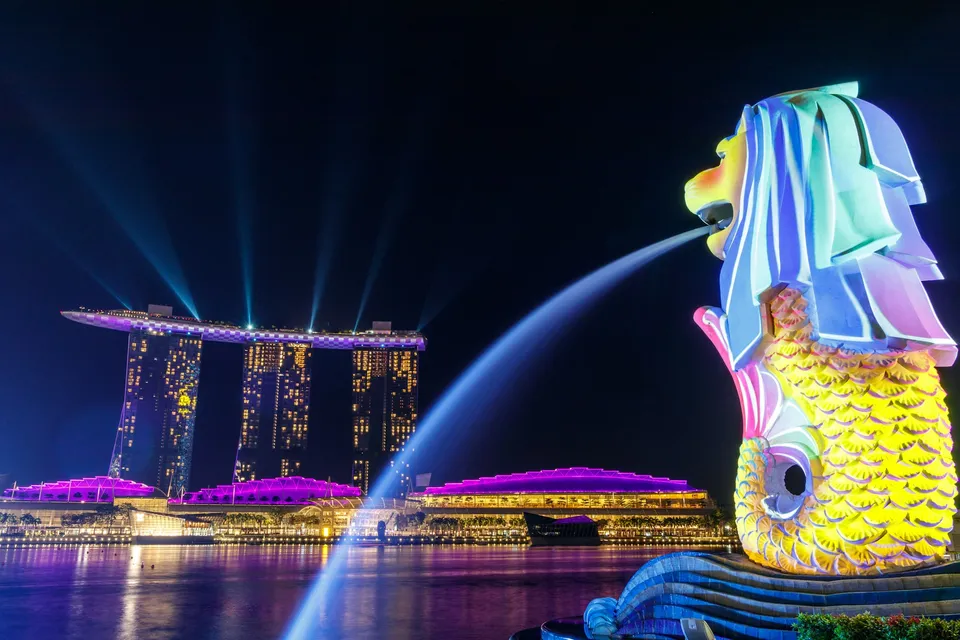
Photo by Lily Banse on Unsplash
Singapore is an easy country to visit and an easy one to get wrong in small, expensive ways. A five hour flight, English everywhere, trains that run to the minute: the big things are simple. It is the detail that catches Indian families out. Chargers that fit no socket in the country, a transport pass you never break even on, a vape in your bag that is illegal the moment you land. These singapore travel tips cover the rest.
The singapore currency is the Singapore dollar (S$). Roughly, S$1 is Rs 63 to Rs 68, so a S$5 plate of chicken rice is about Rs 340. Check the rate the day you fly, and carry less cash than instinct says: S$100 to S$150 covers four nights.
Singapore is close to cashless. Cards work at hotels, malls, taxis, Grab and most hawker stalls, which show an SGQR sticker or a NETS terminal. A contactless Visa or Mastercard doubles as your MRT and bus ticket, so you can tap straight through the gates.
Singtel, StarHub and M1 all cover the island, MRT tunnels and Sentosa included, so choose on price.
Ask our Singapore team anything on WhatsApp
Tell us where and when - a specialist replies with a plan and a price, usually within two hours.
Singapore runs 230V at 50Hz, so no converter is needed. The socket is type G, the chunky British three pin square, and Indian round pin chargers fit none of them. Of all the singapore tips for indians here, this is the one people message us about at 11pm from the hotel lobby. Pack a universal adapter and a small extension board so one adapter powers the whole family. Hotels lend adapters and run out in holiday weeks.
Ananda Bhavan, Komala Vilas, Murugan Idli Shop and Saravana Bhavan sit a short walk from each other around Serangoon Road in Little India, and Tekka Centre does South Indian food at hawker prices, S$8 to S$15 a meal, roughly Rs 550 to Rs 1,000. Jain preparations are usually possible if you ask while ordering.
Where it goes wrong: local dishes that read vegetarian often are not. Char kway teow is fried with lard, laksa and rojak carry shrimp paste, and vegetable noodles from a mixed stall share a wok with the prawns. Stick to dedicated vegetarian stalls, including the Chinese Buddhist ones, which skip onion and garlic too.
Restaurants and hotels already add 10 percent service charge plus 9 percent GST, the plus plus printed beside menu prices. That is the tip. Hawker centres have no tipping at all. Round up a Grab fare, give a bellhop S$2, stop there.
Almost every Singapore list pushes the Singapore Tourist Pass. Do the arithmetic: the one day version is about S$22 including a S$10 refundable deposit, so roughly S$12 of travel, while an MRT ride is S$1 to S$2.50 and a busy day is four or five rides. You break even only on a train heavy day. Tap in with the contactless card you already carry.
Skip the Singapore Flyer too, about S$40 for a view the Marina Bay promenade gives you free. For height, the Pinnacle@Duxton skybridge on the 50th floor costs around S$6.
Singapore is about as safe as travel gets, solo women included. The real risks are dull: heat and humidity at 26C to 33C all year, short heavy thunderstorms (a poncho beats an umbrella), and dengue, so use repellent after sunset. Tap water is drinkable islandwide, so refill rather than buy. Care is excellent and expensive, so travel insurance is not optional here. Dial 999 for police, 995 for ambulance.
Planning a trip to Singapore? Check out our tested guides for real Indian traveler budgets, day-by-day itineraries, and insider tips:
You can tap any contactless Indian credit or debit card (Visa or Mastercard) directly on the MRT fare gates or bus readers. Ensure International Usage is enabled on your banking app. An administrative foreign card processing fee of SGD 0.60 per day applies, which is much cheaper than buying individual physical tickets.
You can buy a Singtel, StarHub, or M1 tourist prepaid SIM card at Changi Airport convenience stores (7-Eleven / Cheers) for SGD 12 to 15 (Rs 750–950) offering 100GB of 4G/5G data for 14 days. Alternatively, install an eSIM (via Airalo) before flying.
1) Bringing or using e-cigarettes/vapes (illegal; fines up to SGD 2,000); 2) Chewing gum importation (strictly banned); 3) Eating or drinking anything (including water) on MRT trains and stations (SGD 500 fine); 4) Jaywalking (SGD 50–1,000 fine); 5) Connecting to un-secured private Wi-Fi networks without permission.
Yes, tap water in Singapore meets World Health Organization (WHO) drinking standards and is 100% safe to drink directly from the tap in hotels, malls, and public water fountains. Carry a reusable water bottle to save on buying bottled water.
Mustafa Centre (Syed Alwi Road) is a 6-storey mega-department store selling electronics, chocolates, gold, cosmetics, and Indian groceries. Visit late at night (after 10:00 PM) to avoid daytime crowds, and remember to carry your passport to claim GST tourist tax refunds on purchases over SGD 100.
Tourists spending more than SGD 100 at participating shops can claim back the 9% Goods and Services Tax (GST) using the Electronic Tourist Refund Scheme (eTRS) at Changi Airport self-help kiosks before checking in baggage.
Singapore uses British standard Type G 3-pin rectangular plug sockets (230V/50Hz). Most Indian 2-pin mobile phone chargers fit directly, but a universal travel plug adapter is needed for 3-pin laptop cables.
No, tipping is not customary in Singapore because a 10% service charge and 9% GST are automatically added to all restaurant bills. Taxis do not expect tips, though rounding up to the nearest dollar is appreciated.
Written by
Meera Rao
City Breaks Specialist. Meera plans Singapore stopovers and short city breaks, with an eye on value, transit and what actually works for families travelling from India.
All guides by Meera →₹1,01,750per adult

A practical Singapore trip from India: days, rupee budgets, visa basics, best months, where to stay and how to book it.
Indians need a visa before flying to Singapore. Fees in rupees, documents, the SG Arrival Card, timelines and the mistakes that get files rejected.
Planning a Singapore trip?
Tell us where and when - a specialist replies with a plan and a price, usually within two hours.